Friday, April 19, 2019

30A - Final Reflection

The experiences, or rather blog posts, that stuck out most to me were the venture concept posts. Both of these posts had significant documentation and asked many questions, meaning that not only were these my longest posts, but they were also the ones that had the biggest effect on the way I was going to move my business. Maybe this is because they came close to the end of the semester, but these posts really solidified the way I wanted to take my business concept.
After a semester in this class, I feel as though I have the knowledge and skills to make it as an entrepreneur in today's market. But to the actual question of, do I consider myself an entrepreneur, I cannot say I do. Pryor had made it very clear during his workshops that he had a distaste for this class for the reason that many of us do not actually do something entrepreneurial. So, while I feel as though I could become an entrepreneur and take nearly any business venture I head far, I cannot confidently say that I am an entrepreneur. In reference to the other question asked, yes I do believe that I have not just gotten closer to the entrepreneurial mindset, I believe I actually do have it.
The recommendation I have to any students taking this class in the future would be this, make sure that sometime throughout the semester, you sell something unique. Not only for the workshop held each semester, but to ensure that you truly use the skills acquired in this class to become an entrepreneur yourself. As for this course however, I will be honest, it is not that difficult, simply stay on top of your assignments and ensure that you aware of each assignment you will have to do at the start of each week to plan around them and give yourself ample time to complete them by the end of the week. To foster this mind set, please, please, please, start planning things ahead of time. Many people, myself included, come from a high school mindset where we do not need to worry about things until the due date. If you are like me, this is the course that will begin your transition to a more planning mindset. Take this as the first step to becoming more responsible when it comes to anything you do. Now that I've completed this course, I feel as though I've taken my first real step toward becoming a working part of today's society.


(Source) https://fee.org/articles/use-this-amazing-resource-to-track-how-humans-are-making-progress-around-the-world/

29A - Venture Concept No.2

1. Opportunity
There are two major forces acting upon the world's population that are providing me with the necessary demand for my product. The first is the ever growing world population, people are moving into smaller homes with one another, meaning that there is an increasing need of small, movable furniture. The other force is the ever increasing mobility of people around the world, whether it be moving from one home to another, or moving out of one's home into an apartment, dorm, or other building. My market was originally defined by anyone living in a space in which they would need furniture that was compact, mobile or both. However, I have shifted my market to target these people, but more particularly retailers in need of these kinds of furniture, especially rental furniture retailers or suppliers of furniture for large buildings or apartment complexes. Currently, consumers are satisfying this need by buying cheap furniture that can be disassembled or simply paying moving companies to move bulky furniture from one space to the next. Retailers are satisfying this need by simply buying furniture that they can ship or sell. This opportunity is one that isn't world changing, but is significant enough that an entire market can be sold on it. The window of opportunity is one that will always stay open, but not without more competition coming in further down the line. The main issue I'd have with joining this market later would be other furniture companies patenting ideas that I'd have.
2. Innovation
As I'd stated in my previous venture concept, the product I'd wished to create has changed. However, now thinking back, it hasn't changed as much as my market for it has changed. The main concept of it is movable furniture. To elaborate, I'm referring to furniture that is able to be folded, compacted, or even rolled from place to place without excessive amounts of labor. Where I've changed my design is similar to how I've changed my market, this is to say I've changed it from being more accessible to the average consumer and cut down on costs by simplifying it to be more appealing to rental furniture retailers and business furniture suppliers. While my furniture isn't exactly the typical, industrial looking furniture you'd see in an office building, it certainly isn't going to be the center piece of any house any time soon.
3. Venture Concept
The reason companies would switch, or at least begin to purchase my product would be, the low costs I'd boast along with the utility of the furniture. While my furniture would be similar in cost to other lines of furniture people would buy, the costs of shipping and handling would significantly decrease with the product, meaning that both the customer and the supplier save money, meaning I also gain a slight profit from that. I can sell my furniture at a slightly higher price and still be saving my customer money. I imagine it would not be hard to enter the market and get supplier to begin ordering my product because of the amount of extra revenue they already have for purchasing and selling new products. My competitors would at first only be other furniture lines; all of us competing for space in stores all around the country. However, after my product takes off, I'll begin to see competition from other brands looking to copy my furniture line's design. The weakness my line would have would be not covering enough pieces of furniture or not being specific enough in my patents, allowing other lines to pick up the slack I'd inadvertently leave for them. The role of packaging and distribution is the most important when it comes to my line, as this would be where both suppliers and consumers would save money, the easy and plentiful transportation my product innately provides. As stated before, my price points would be slightly higher than competitors but would save money in the long run. The customer support and relation would only be business to business at first, meaning I'd have to be very charismatic in order to convince my market that my product is worth buying. My business would consist of mostly manufacturers and transporters moving my product wherever it needs to go, with a small group of managers and financial experts managing the logistical side of the company; this being the amount of units we're shipping, the costs, the profits, etc.

4. Changes/Summary from feedback
The piece of feedback I'd received involved praise for me maintaining my stance on who my market is. So in this post, I reiterated my market and did something that I think might help my business venture in the long run: I defined my market very specifically, keeping a wide view on the amount of people I can sell to. This is to say I was very specific in the people who would buy my product, but also defined multiple groups ensuring that at least one of the groups would purchase my product.

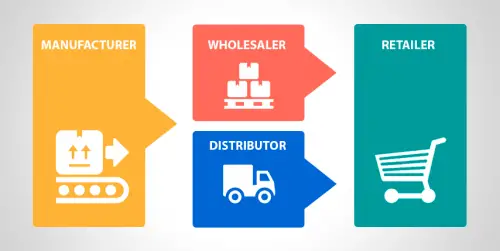
Below I've provided a very simplified look at how my relationship would be with my retailers.
Image result for supplier retailer relationship
(Source) https://difference.guru/difference-between-a-wholesaler-a-distributor-and-a-retailer/

Friday, April 12, 2019

28A - Your Exit Strategy

Should my business actually take off, because I'm simply selling a line of furniture. I'd begin hiring designers in order to take over this job for me, at which point I'd begin taking a more logistic job. I except I'd become something of a CEO for my company, managing the finances and worrying about the stocks and marketing. Granted, I wouldn't be growing the company past a few designers and ensuring that my suppliers continue to provide me with the necessary materials. Similar to the Eames line of furniture, I intend on making my line a sort of household name to maintain royalties and potential to maintain business even after I inevitably retire.
I've selected this particular because it ensures that no matter what I do, I will always maintain some sort of income or acclaim from my furniture. While I may not gain a ridiculous amount of money or vast political power as some innovators do, I will ensure that my name will live on far past my life span.
Personally, my exit strategy has only had one big effect on my business strategy, and that is branding. More than anything, I need to ensure that my furniture line has a name on it, whether that be my own family name or one I come up with. This way, any possible imitations will be just that, imitations of my product. Thusly, I can act accordingly upon any imitations, taking a cut from their profits, or simply shutting down competition using my innovations.

27A - Reading Reflection No.3

For this reading review, I decided to read the book How to Fail at Almost Everything and Still Win Big by Scott Adams. I'd seen the book in other reviews when I was doing peer reviews for the second review and decided to pick it up for myself. I found it rather comical as it depicted key moments in Scott's life and how he ended up succeeding from his failures.
The biggest theme of the book is focusing on the now. This means that while you can have dreams of the future and grand goals, these all pale in comparison to the weight of your current plans. If you keep your head in the clouds, you'll never get the rest of yourself up there. In short, the author is telling the reader to evaluate what is important in their journey, and commit to their journey without their end goal in mind. Focusing on the end goal will lead you off track.
This book has very similar themes to that of this week's assignment about failure, although that isn't hard to find out given the title of the book. Regardless, this book helped to explain the deeper meaning of failure a bit better to me. Failure isn't just a setback, nor is it just finding another way of doing things. In reality, failure is an incentive to get it right the next time. It's a learning experience that shows you the outcome of what you've done in order for you to learn how to do it better the next time.
The exercise I'd design for this class based around this book would be as follows. I'd have the class recount three different failures in their lives. The first being one when they were a child, the second as a teen in high school, and the last being one that happened extremely recently, as in a week from the assignment the latest. I'd make them recount what the failure was, why they failed, and how they solved their issue for the first two. But for the last failure, the one they currently have, I'd make it so they have to describe the process in which they will seek amends for this failure. For example, failing an exam so you go through a different process of studying, like getting a tutor or Study Edge. Lastly, I'd have the students connect how this process was similar to their past failures, letting them see that getting out of failure is as simple as finding a new process of doing things.
My biggest aha moment of the book was when I finally understood what he meant by focus on the path, not the goal. I'd always envisioned focusing on the goal as being a motivator, so when he kept describing situations in which focusing on the goal led to more failure, it really didn't click at first. Once I understood this central concept, the rest of the book became much more insightful than I'd previously expected. I got more out of the book than what I went in anticipating.

26A - Celebrating Failure

This semester, I've failed myself; not in the usual aspects like schoolwork or grades, but in my own personal health and well-being. I've put my grades and work above myself. I told myself this semester that I'd make the conscious effort to start going more to the gym and eating out less, in order to cook for myself. While the semester started out nicely, I slowly began to put more emphasis on my grades over my health, excelling in my classes but stunting my own health in the process. Granted, this is not without reason; because of a mistake caused by myself and my adviser in my first semester, I am required to excel in each of my classes this semester in order to change majors. This has put an extreme tension on me that has worked in my favor when it comes to studying and work, but causes me anxiety in literally everything else.
Through this, I've learned that I need to take myself into account more than anything. Grades are expendable at the end of the day, but my own health is something that is irreplaceable. While I'm certain no permanent damage has been done to my body, I do know that I've set myself back several months of exercise that I'd done prior to this semester.
Moving into my next semester, I will take myself more into account, (God willing I do end up with the grades needed in order to change majors.) Without the stress of having to achieve above a 3.5 GPA this coming semester, I will be a lot more free to do what I please. The first thing I will do is set aside a permanent time in which I do some sort of exercise; preferably this would be going to the gym, but should I need the extra time I set aside, I have a set of weights in my room for these occasions. 

Friday, April 5, 2019

25A - What's Next?

Existing Market
Step 1: First and foremost, I have to finalize and begin bringing my concepts to the real world. This mean I'll probably be going to the Infinity Lab in order to create my first, rough prototypes. I'll need to amass all the resources needed: wood, hinges, saws, and sanders in order to fully put together a first prototype. The aim of this first prototype is to test the functionality of my product rather than to bring something to sell to people.
Step 2: I interviewed two of my dormmates who will be seeking out apartment living next semester as well as the current tenant of an apartment I'm interested in. To note, both of my dormmates answered together, meaning their answers were very similar. The questions I asked were more to the side of: what functionality do you think the furniture should have, apart from foldability, what material should it be made of, and what type of furniture would you be most interested in?
My dormmates were quick to come up with ideas for other functionalities: small compartments that could be accessed even when the pieces were folded, maintaining functionality when the furniture was folded, like a dresser turning into a small step or even strongbox, and lastly pop-out wheels that could be folded out for easier movement. When it came to material, they weren't exactly familiar with what woods go into building different furniture, which I can't blame them for. Funnily enough, they suggested mahogany wood because they believed it to be one of the more fancy types of wood. Lastly, when it came to furniture, one said they needed a nightstand for sure, because his old nightstand was very old and he wanted a new one, whereas my other roommate was interested in desks. He's the kind of guy to sit behind a desk all day and do work anyway, so I could see why he was interested.
The apartment tenant I asked was in  the process of moving out into a house, so while he didn't apply to my target audience, it would be a good way to gain insight into an audience I didn't originally intend to reach. When it came to what he thought should be featured within the functionality, he heavily emphasized that I should not sacrifice comfort and style for utility. He explained that furniture in most homes is meant to be a reflection of what the consumer wants to feel in their home, so they wouldn't want to feel like they're in an office building. When it came to the material, he suggested plywood as a base to test for functionality, then to move onto whatever sturdy wood I had available, oak and maple were the examples he gave. Finally, when it came to the piece he was most interested in, he simply wanted something like a small table or nightstand in order to get a feel for what the rest of the products would be like. Start out small then work my way up if I like it, is the way he phrased it.
Step 3: Personally, I believe that my concept needs more functionality. So, the suggestion I received from my dormmates about pieces like dressers or desks turning into something else when folded really stuck with me. The way I see my concept moving forward is through further testing and prototype creation. What will most make sense is taking my prototypes and verifying that they function, then going to potential investors and acquiring the funds necessary to begin regular production.
Following this, I will bring a finished product to investors to ensure I have enough funding to last me until the point that I go to retailers and provide them with a secure line of furniture. Once a retailer is set and their payments begin rolling in, then my product will begin constant shipment. I will repeat this process with other retailers until the point that I become a well-known business that is known for mass producing my type of furniture for both consumers and retailers.

New Market
Step 1: As I'd mentioned with my interviews, I've been targeting people who are moving into apartments and small spaces, rather than people moving into homes. These people, while they would have more money, wouldn't necessarily be looking to buy my type of furniture. Granted, after the interview, I see that there is a potential market here that I've overlooked.
Step 2: My furniture may be able to cater to people in this market through design and stylistic choices. While they wouldn't need to move their furniture from home to home, it certainly would be a hassle to move it from room to room, so my furniture line could work to alleviate this. Outside of this, I'd simply be another line of furniture they could look into should they like the more simple, modern style my current iterations have.
Step 3: I interviewed two homeowners in the Gainesville area (I've been touring homes throughout the area as I'm looking into the city's real estate market for something else.) I asked them about my furniture concept, keeping the conversation very general (I was touring their home after all.) The only specific thing I mentioned to them is, what kind of furniture would they want to buy right now, as in what kind of furniture would they want to add to their home at any moment. Unfortunately, nightstands, desks, and dressers were not included in their lists. The first homeowner specifically mentioned chairs and other sitting furniture, as these pieces were easily stored and constantly used. The other homeowner mentioned footrests and small containers for outdoor use; the kind of containers that would be used to store pool toys, basketballs, general outdoor toys, while also being an extra place to sit.
Step 4: Clearly I need to try to have my line of furniture be as broad as possible. This is not to say that I need to start out with a wide assortment of ready products, rather I should have one or two finished products to start with that I can lean on for support while I prepare more. The types of furniture I should focus on are those that are constantly breaking or are constantly used, mainly sitting furniture. If I can jump into the chair and couch industry following my first designs and sales of nightstands, desks, and tables, then I can easily move into other areas.
Furthermore, I need to market my furniture line intelligently. I came into this idea thinking that it should be a line of furniture for apartment-goers; a line of furniture for those with not a lot of room. Rather I should start with this idea, then branch out and continually target people, not necessarily on where they live, or their socioeconomic needs, but on where they want to feel like they live. For instance, there are those who love living in small apartments, for these people, I'd market one way, and for anyone who wishes they could live in a big mansion, I could market another piece that way. More than anything, my marketing strategies need to be concise and effective.

24A - Venture Concept No.1


1.      Opportunity
My customer base is anyone in need of furniture, meaning that this includes anyone who has either recently, purchased, rented, or moved from one home to another. This implies that people have at least a certain amount of capital to spend, guaranteeing that I will have at least a small market. The specific people who most have the need are students moving to apartments (both renting and buying,) workers/commuters who are constantly moving around the state or country into cheap apartments, and anyone looking to sell their home and in need of newer and/or smaller furniture.
The reason this market is prevalent today, is because of how rapidly the world’s population is growing. Take for instance countries like Spain that either hold a multitude of people in a single household, or Japan that have extremely small apartments for one or two people. Innovations have been created for these people in furniture, especially in Japan with their changeable furniture, pull-out couches that become beds and tables for instance. But in most other places in the world, particularly in America, there aren’t any similar products. This means you’d have to import for something that doesn’t really apply or make your own model, which is what I’m doing. Currently, customers are satisfying this need only by importing products with similar features to what I’ve specified above, or simply buying smaller furniture. Both options aren’t the most efficient and can even be rather costly. This opportunity is one that will remain prevalent, so long as the world population continues to rise, meaning there will be less and less room for people and they’ll have to live in smaller and smaller places. The same applies for how long the window of opportunity will remain open. So long as no natural disasters, major wars, or plagues come about, then there is ample time for me to create, market, produce, and sell my product.
2.      Innovation
The product I’ve proposed at the beginning of this course has changed drastically, but has maintained the same theme: movable furniture. This is not to simply say, furniture that is able to be moved or that has wheels, rather it is to say that the furniture itself is easily moved from place to place and stored if needed. The vision I’ve always had is a desk or nightstand that can be emptied and folded up into a small, compact piece. This way packing one’s furniture or moving it from one spot to another is easy. Currently, there is not bridge in between the realm of bulky furniture that comes in a single piece, meaning it is an extreme hassle to move around and furniture that must be disassembled and assembled, simply to get it through a doorway. I want to bridge these two things by making a line of furniture that comes in single pieces, already built, but can be folded and shrunk in order to move about. While I am unsure as to the exact logistics of my product, I’m confident that I could outsell most of my competition by charging around $30-$40 dollars for nightstands, $60-$70 dollars for kitchen tables, and $50-$60 dollars for work desks. These prices are already cheaper than the competition but would provide way more utility than my competitors.
3.      Venture Concept
My innovation will solve this problem by providing my potential market with a line of furniture that is cheaper than most of my competitors with a significantly higher amount of utility in the form of being able to easily move the furniture from place to place. The consumers themselves may be rather hesitant to switch to this product from their normal providers however, I aim to market my line to retailers instead. Retailers would provide a much more steady amount of revenue through constant sales, despite a small drop in the price I can sell it to them for. Where this becomes most prevalent is in the market of furniture renters. These retailers are extremely valuable to me as they are constantly looking to buy furniture that provides a lot of utility, is durable, can be held in their stores in mass, and are transported easily; it just so happens that my product aims to meet all these needs. My competitors at this point would be slim, seeing as retailers will take furniture from nearly anyone. Granted, my main competition would be IKEA, as their furniture can be marketed to be similar to my own, without the need of actually having that extra utility; the name alone is enough to keep people buying their product instead of mine. Packaging, style, and the actual production of the pieces matter immensely, as patent laws will certainly prevent me from styling any pieces to be similar to others. Despite this, I’m certain that producing a desk in the style I’d like wouldn’t be much of an issue. The business I’d start would have to involve a factory with a good number of employees, say fifteen to twenty, all ensuring the machinery that would be producing the pieces are functioning properly. This would only be if my idea truly does take off and I can amass the capital necessary to continue production and subsequently begin mass production.

23A - Your Venture’s Unfair Advantage

1. Infinity Hall’s Design Lab.
V. The lab grants me acces to all of the materials I’d ever need in order to produce prototypes, or even nearly finished products of my concept.
R. Only a few students know about the lab, and fewer ever utilize it, giving me an easy space in order to work on and produce my furniture.
I. While students do have access to the lab, I’m confident that no other student is going to create my concept there, at least in my time there.
N. Any other lab or design space I’d go to wouldn’t have the resources, human capital, or cost/time effectiveness as going to the design lab.
2. Home designer contacts.
V. Not everyone has many contacts to people within the industry of designing home spaces like I do, meaning I can easily get a good idea of what a consumer would want by contacting these people.
R. As stated before, not everyone has these contacts, making me somewhat unique in my industry.
I. While others may have the contacts I do, not everyone wishes to utilize them for the same reason, most are looking to them as consumers instead of producers.
N. Without these contacts, my concept could still come to fruition, but it would be lacking the element of understanding what a consumer would want in the look of the product.
3. Contacts in the furniture design industry.
V. Similar to above, these contacts would be key in determining costs, design choices, and the logistics of my product.
R. Again, not many people have access to these contacts in the way I do, much less with the intention of using them to design their own furniture.
I. The advice and information these people would give me would be key in helping my design that non-professionals could ever give.
N. I need these contacts because without them I’d be going in somewhat blind, making a lot of guesswork as to the process of furniture design as well as guessing the costs along the way.
4. Subject passion.
V. Many people in today’s workforce lack a driving passion toward what they do. Emotion is a powerful thing, especially when working on something, granted this passion will not lead me to “fall in love” with a prototype or unfinished product, rather it will lead me to keep retrying until a make a product with little to no flaw.
R. As stated previously, people usually feel a lack of emotion toward their work, whereas I aim to put my all into what I do, while also avoiding the pitfall of getting stuck on one iteration of my project.
I. This emotion is not unique by any regard, but is something that the world lacks.
N. Without this passion, it would be impossible for me to even go on with this. Frankly at this point, I’d have already completely given up thinking that the product is too hard to design.
5. A multitude of potential concepts
V. With multiple possible pieces and paths to go with the furniture, it makes it easy for me to pick out which will be the simplest to produce, while also maintaining style and functionality.
R. As stated in the previous point, people fall in love with prototypes or concepts, leading them to ignore any possible changes or alternatives.
I. With multiple ways to go about creating my product, I’m certain that one of them will be completely unique and sell my own style and brand.
N. I’m certain that going in with a single, or even a handful of potential concepts will end with me being shot down on the spot, so having a multitude of ideas to pick from to start designing is a must.
6. Versatility.
V. As with the nature of my furniture, versatility is a must, both in the mobility of my furniture as well as in the concept of the furniture itself. I adapt rather easily to change and have taken this into account throughout the course.
R. I won’t lie, versatility isn’t unique, however it is somewhat rare for both the product and producer to be versatile, so I’ve got that.
I. The versatility of my furniture is rather unique, I have yet to find another line of furniture that is able to be folded, compacted, or even easily transported without some disassembly.
N. Versatility is a core feature with my furniture line, as well as an integral part of what makes me, me.
7. Circle of supportive friends
V. Having a circle of people I know I can rely not only helps m Erin every day life, but also in any of my business ventures. To relate it to this class, I would classify this as human capital. But in all honesty, having my friends is enough on its own.
R. While having friends isn’t a rarity, it is nice to have these people by my side.
I. Having friends isn’t some unique or inimitable. So this doesn’t really apply.
R. There is no substitute to having friends, the bonds formed between myself and these people isn’t something that can be bought or faked.
8. Time
V. Recently, I switched major from computer science to information systems. Thusly, I’ve been freed up from a lot of the obligations I’d had: tedious exams, arguous coding projects, etc. time is extremely valuable to someone looking to create a concept like this.
R. In this day and age where people want things fast and easy, it’s those with the most time who can actually provide, so I think I’m one of the few.
I. Again, time is relative and isn’t something that is imitated per se.
N. Time is essential in my project as I need ample enough time to create and fully develop my idea.
9. Unique concept
V. The value of having a unique concept, especially in furniture, will definitely pay off in the long run. Consumers will have nothing else to buy.
R. As the title implies, having a unique concept implies that it is one of a kind, the most rare if you will.
I. While competitors will try to imitate my product, I have the distinct advantage of being first, as well as utilizing patent laws to my benefit.
N. When consumers begin to purchase my product, the lack of a substitute will keep them buying my product and put up barriers to entry for any potential competition.
10. An established market
V. Having an established market ensures that no matter what product I make, so long as I cater to the needs of that market, I will have consumers. This also ensures that I have a target audience to market toward and design my product around.
R. No everyone in the world who has a need know that they have it. This is not the case when it comes to furniture, at least most of the time.
I. Other markets may try to imitate this, but can only go so far within their consumer base, if there even is one at all.
N. As with any market, there cannot be any products without consumers. So without my market, there would be no product to be made in the first place.

Most important: Personally, I find the most important asset I have to vary between two. The first being the more practical contacts I have with industry experts. These contacts put me in touch with people who can accurately explain to me how to market and sell my product, ensuring that I at least make some of the money back from what I put in.
However, I find that passion is equally important, as without it, the entire project would have been a bust a long time ago. Passion in what I do keeps me going and keeps me from flat out giving up.

Friday, March 29, 2019

22A - Elevator Pitch No. 3


When it comes to this elevator pitch, seeing as I only had a minute instead of the usual minute and thirty seconds, I decided to cut straight to my point. I only covered three topics, what my idea was, why I wanted it to come to fruition, and my thought process of who to market my idea to. Much of my feedback was very positive and mostly involved the enjoyment of hearing that someone is finally wanting to solve a furniture problem people have. The one thing I wish I could have done in this video would be to make the comparisons to other products as I'd done in my previous pitch; the comparison to IKEA furniture was really well received.
When it comes to what I changed, again, I merely made it shorter, cutting out a bit of the in-between I'd done in my previous pitch. Personally, I've been comfortable in front of the camera since the first pitch, but I find it much easier to get my point across now. For instance, this pitch was done in only three takes, unlike my usual seven or eight. Personally, I feel as though this assignment has made me question how I'd pose my pitch to someone in person, as well as how to properly convey what I'm trying to do if asked. My product has certainly grown a lot as well; from a furniture line I wanted simply to give to the consumers directly, to a line of furniture that would be easily sold to retailers who can both, more efficiently sell or rent it, as well as give me a steady source of income through constant sales.

21A - Reading Reflection No. 2

The book I chose to read was Inbound Marketing by Brian Halligan. The general theme of the book is putting your company, business, or even idea out into the realm of the internet, particularly social media outlets. As such, it goes over topics like: how to remain relevant with the changes to the shopping industry, how to get your name/brand on Google, how to gain more consumers through your current consumers, and how to efficiently market yourself on social media, to name a few of the topics. Although the book is a bit outdated compared to the standards of social media and online marketing today, the core values it presents can still be used. In my opinion, the most useful topics are those involving people's behaviors, like chapter 8 that details how people are more likely to show others a site or webpage if it "blew their mind."
The book's topics did connect with many of the topics we've learned in the class thus far. Most of which involved marketing and how to turn your prospects into leads. When it comes to how this book "enhanced my learning" for the class. Most of the material had already been covered in previous lectures for this course, as such I already thoroughly understood the topics. I noticed as I was going through the book, that it mostly covers surface level details, never really delving deep into its marketing topics. This is probably because the book itself is marketed toward entry-level marketers, not people who have more experience and knowledge, like the people taking this class.
If I were to design an exercise for this class based on the book, I'd design an exercise that revolves around having the students create their own mock social media page. It'd involve them using a program like Wix in order to show me how they'd "wow" their visitors. They'd be graded based on the principles the book tries to show, like how easily would I be able to find it on Google, would I be enticed to show more people the site, and so on.
I suppose what most surprised me about the book is the alternative to having people who frequent social media on your team. The suggestion posed was to work with a PR agency. Granted, this seems like an obvious solution, but its one I'd never given much consideration. Frankly, I've always thought that it'd be the easiest simply to hire or work alongside people who understand the platform. But the process of hiring, working with, and gathering knowledge from a PR team was quite interesting. Many of the topics covered in this book I'd already been at least somewhat aware of, but I've never had to work with a PR agency, so this was a bit eye opening.

Friday, March 22, 2019

20A - Growing Your Social Capital

1. Domain Expert in the industry: Martin Amado (Owner of  "The WOW Factor!" home design company and host of the Miami Channel 10 "Soflo Home Project" Show)
Martin Amado has been an expert in furniture design for many years and as such would serve to be an excellent contact when it comes to learning about the industry. While he himself has never owned a furniture company or store, he is the owner of a home design company and has done home makeovers and tours for several years. As such, he is an excellent contact to have as I will easily know what people of every budget are looking for, as well as how to style my furniture for any purpose. Funnily enough, I've known Martin for a bit over a year now because my father recently became the lead producer and editor of the aforementioned Soflo Home Project show. The exchange we had was brief, but the "favor" he did for me was give me a few furniture tips, for instance, pieces cannot be simply bland, as no one will be enticed buy them, however, they cannot be overly flashy either as they would suck the attention out of a room. My pieces have to be marketed in such a way, that they affordable, but not cheap, and liven up the room, without being overly flashy. Because we've worked together on the show, on occasion, there isn't much of an expectancy for a "return" per say, however, he is curious to see where this concept goes. Finally, he will serve to boost my market, because of the copious amounts of experience he has with working with furniture; I can trust is opinions and advice. Furthermore, he is a known name in the furniture design industry, meaning if I ever did use his name, it would be an excellent contact and serve as a guarantee that my concept is backed by a true expert.

2. Expert in the market: Lauren Jones (Client Relations Specialist for Southern Furniture Leasing Inc.)
Lauren Jones is an employee for a big furniture leasing firm known as Southern Furniture Leasing; (and is unfortunately an FSU graduate.) She has worked as a client relations specialist in the company for almost two years now and understands how to work with her customers. I found her through her LinkedIn page as I was searching for people who work in the marketing department for furniture rental companies. Seeing as we're both Floridian students, I decided to give contacting her a shot. After a quick phone call, I'd gotten a bit more information on how to work with my potential customers and retailers. When it comes to customers, she said, it's important to appeal to them in whatever way you can. It's important to act like a car salesman, but not look or sound like one. What she meant by this was, to find what your customer wants, amplify that and assure them that they are correct, it's usually easy to sell to people that way. On the more company side, she admitted that she didn't know a whole lot, but what she explained certainly helped. She explained that when marketing to a retailer who's been doing similar things for years, it can be difficult to "get in with them." The most important things are selling them on why they need your product (making it unique,) and more importantly, why you can get it to them cheaper than anyone else. When it came to why I was asking, I merely posed that I was a student looking to create some concepts in the industry, not really disclosing too much information, (especially not that I am a UF student, considering she is an extreme fan of the Seminole team,) so there isn't an expectancy for a "return." As for how she will enhance my ability to exploit an opportunity, I cannot see many ways. She's extremely new in her present company and has little experience elsewhere, apart from her advice, I doubt she will prove useful later.

3. Expert supplier: Kari Scott (Human Resources Manager for U.S. Lumber)
Kari Scott is the Human Resources Manager for U.S. Lumber, a lumber provider for many companies throughout the United States. Most of these companies for construction or furniture based, similar to the market I'm looking for. Similar to Lauren Jones, I found Kari on LinkedIn, when searching for the employees of U.S. Lumber. I found her to be the most efficient as she was both accessible as well as a good judge of character considering her position in the company. As such, I reached out to her to ask her about the general operations of the company. Particularly the process of selling and shipping lumber. Considering I may need to work with this company in the future, it would be a good fit. To summarize our conversation, she explained that there haven't been new major entrants for a while, but the process would be consistent shipping orders followed by personal meetings and contacts to establish a relationship between companies. Once the company is confident that they can supply you with lumber that you will properly reimburse them for, then bulk discounts and regular shipping can come into play. This information was rather useful as I wasn't aware of the process in which retailers and designers acquire their raw materials until now. This contact may also come into play later if I do end up pursuing this opportunity further; I now have a means of acquiring raw materials.

After working on this assignment for a few days now, I understand just how difficult it is to get into contact with people. The first contact I had was readily available, but the other two took quite a bit of searching. I called quite a number of people who either didn't answer, were busy at the time, or were doing work and didn't have time to answer my questions. With this experience, I take away who I should target first when it comes to my contacts; never contact the people in charge of all operations as they are too busy, but at the same time, never contact low level or just employed workers, as they aren't familiar with the trade yet, (this can show in my second contact.) Lastly, this majorly differed from my networking experiences in the past, as I mainly spoke with consumers, never producers, experts, and suppliers. However, these people provided much more insight than my consumers could have, (granted it's in different areas, but that's besides the point.) Also, these new contacts may have use in the future with any opportunities I wish to seek out.

19A - Idea Napkin No. 2

I'm a person who is very exploratory. I feel as though I've been good at a lot of things, but never amazing at many things. However, the few things I am very good at, I dedicate my time and effort to perfect it. One of these things is creativity and innovation. For years I've thought and dreamed up ideas, just trying to perfect my thought process. Because of this, I've become a significantly better thinker when it comes to anything I design, build, or even sell. For instance, I've designed and build computers and robots throughout my high school time both for clubs and for my own use. My aspirations for my concept, is to begin in Gainesville, get a steady, secure market. Then market to furniture stores and rental stores for universities around the United States. I feel as though mine is a good idea that can take off. However, before any of this can take off, I must get into the more legal side of things. I must learn about patent laws and infringements before I even propose my idea to anyone. I hadn't considered this until it was brought to my attention thanks to the feedback of my last post.
I am offering both an affordable option for furniture to my customers, as well as an easy, steady supply of rental furniture to rental companies. I am to be the supplier of these companies, working directly with the raw materials up to the retailers. Retailers of furniture would care about my product because of how cheap, yet efficient my furniture line would be. It would be a hit with their customers and thus it would provide a steady supply of cheap furniture they can source for their stores. Even if they don't end up selling every single unit, with how affordable it will be to buy from us, their profits will still be high. What sets my idea apart is that no one has created a full line of foldable, compact furniture, meaning that I'd be unique in that aspect. Furthermore, with how I want to design it, it would be cheap to produce and to sell both to consumers and retailers, meaning that consumers get a good price and retailers make stead profits.

Personally, I believe that with my background in designing and building complex pieces of machinery, I believe that I would have no issue with the tools involved in this trade. However, when it comes to putting pen to paper, I understand that it will be rather difficult and the learning curve will be steep. While I have the knowledge to build machinery, I've never designed furniture, and while I don't think it would be that different, I cannot be certain. Despite this, I'm determined to have this idea come to fruition in one way or another.

From the last post, one thing I hadn't considered is the possibility of my concept being taken. As the feedback had pointed out, I must learn about patent law before I start proposing any concepts to backers, let alone the retailer companies I want to sell to. Apart from this, it seems as though I have a lot of support among my peers, which is well appreciated.

Friday, March 15, 2019

17A - Elevator Pitch No. 2


In this pitch, I tries to bypass as many pre-tenses as I could to go straight into my product. I also tried to describe my product as briefly as possible, avoiding unnecessary paused for explanation and some humor. What changed most about my pitch, was I imagined myself in a room full of investors for furniture. In this room, I didn't need to go over the basics of furniture, as they would already know what I am talking about. Instead I focused on what makes my product unique, as well as why they should invest in my product.

18A - Create a Customer Avatar

In the past, I described my prototypical customer as anyone who moves homes a lot, whether that be for business, family, or schooling, all applied. However, for this exercise I want to start out with the customer that would be most common to me specifically, the customer I will be appealing to first, university and college students moving away for the first time. Many of these students are moving into dorms and apartments in need of some furniture, whether that be some furniture (like nightstands or some chairs,) or a full set of furnishings for their new home. Regardless of their situation, they will all need something that I think I can provide. All of these customers have in common that they are looking for furniture that is cheap and expendable, since they'll only be living on campus for about four years. Usually, students are pretty savvy and look up all the good secondhand furniture sellers online, places like Craig's list and eBay, paying extra close attention to any local sellers; other  students are constantly coming and going and will be getting rid of their old furniture too. This is the target I want to hit, I want the word to spread at this point. My prototypical customer will be most able to be influenced into buying my furniture line here, thinking that they are getting the best deal because other students suggest it. College students, like myself, are constantly looking for secrets and cheats around college life, so hearing about a furniture line that is as cheap as mine, but at the same time stylish and comfortable, it'll be like they've found a gold mine.

The avatar I've created is a person who was just admitted to the University of Florida. A girl from Atlanta who has worked hard to gain her spot in this school, but hasn't really thought out all the details between her high school classes. Once her summer rolls by, she's moved into a dorm room for the first time with nothing but a dresser and a bed. She's brought along the essentials for hygiene and clothes, but not much else. So she begins to look for everything else she needs, trying to save money where she can. She's social, so she goes to flea markets, around campus, and to different social gatherings in order to make friends and look for everything she needs with help. She finds it easy to manage her way around campus with her new friends because some of them are upperclassmen. She finds it easy to relate to them because of their shared social nature, as well as common interests in TV shows and faith.

Knowing myself, I would relate heavily to these prototypical customers; the average college freshman moving away from home. In an unfamiliar location with no one I know from home, the way I'd go about looking for help is through that of my older peers. Juniors and seniors usually know a lot more than I do, so I'd look to them for guidance, and if they suggested something, I'd look into it. I'm quite confident I'm not the only one who does this, meaning that my prototypical customer, who I've sort of made out of my image from a few years ago, is someone I can understand quite well. My avatar certainly isn't a coincidence, I just imagined the average University of Florida student, which I am as well. I think the main difference would be the way in which I look for my items and go about learning. I do so in the comfort of my own home, usually behind a computer or on the phone with friends, not usually going to social events unless needed.


Friday, March 1, 2019

16A –What’s Your Secret Sauce?

1. I am very good at conversing with people. This allows me to get points across to them while also gaining insight into their psersonakity and forming strong relationships.
2. I am very creative. Given enough time, I can come up with a concept for nearly any invention or subject; maybe something not extremely optimal, but enough to pass until given more time and resources.
3. I am good at improvising. If put on the spot, I can almost always pass myself off as knowing what I’m doing, regardless of how much I actually know.
4. I know when to apply emotion. When it comes to winning people over, emotion is a key factor; so when it comes to a situation in which people are unsure of who to side with I can use emotions effectively enough to gain support.
5. I’m very observant. No matter where I am, I’ve always been very observant of my surroundings. Whether it’s reading the air of a room or carefully listening to key points in a presentation, I usually pick up on key points.

Interviews
1. Mom

Me: “So what makes me special?”
Mom: “Well, you’ve always made a presence whenever you enter a room. Between your charm and personality, people generally pay attention to you, regardless of the emotions they exude to you. Those that admire and follow you end up being your friends, those that don’t only envy you. You know this from your elementary and middle schooling.”
Me: “Yeah, I know. Anything else you can think of?”
Mom: “I’m sure there’s a lot more, like your improv, good looks, smarts,... what’d I miss?”
Me: “I think that’ll be enough, thanks Mom”

Summary: It’s clear that my mother would have a very high opinion of me, she always has. In any case, she confirms most of my points, especially the first.

2. Girlfriend
Me: “What makes me special?”
Girlfriend: “Good looks, funny, smart, witty, derpy, good at giving hugs, good at-“
Me: “Alright, alright, I get it. Thanks for the help.”

Summary: My girlfriend has quite the bias towards me when it comes to my description. So, while I trust her opinion of me, I think there is at least some bias when it comes to her description of me.

3. Adrian
Me: “So what makes me special.”
Adrian: “What do you mean, like academically?”
Me: “No, like in general.”
Adrian: “Well I guess you’re very determined when it comes to what you do, from school to gaming you always try your hardest.”
Me: “That’ll do.”

Summary: When it comes to my good friends, I can usually rely on them for help and support. Here is no different, when it comes to Adrian, I know I can rely on him for honest opinions about myself, so I trust this opinion and can attest to this being true.

4: Arthur
Me: “So what makes me special?”
Arthur: “Uh, I guess you’re good at what you do. You generally do your work and don’t even need to study after. That kinda what you’re looking for?”
Me: “Yeah, I guess that works.”

Summary: Arthur isn’t a major friend of mine, but someone I’m comfortable relying on. I figured his response would be something along these lines.

5. Alex
Me: “So what makes me special?”
Alex: “Well the one thing I can say for sure is that even though I haven’t known you for long, you’ve been very friendly to me. Not in a way that’s simply token-like, but as someone who genuinely wants to take interest in me as a person.”
Me: “Well, I really appreciate that, thank you.”

Summary: Even when it comes to people who I’ve only just met, it’s clear that they think of me as someone personable. I always try to make my best effort to show others that I’m someone who they can come to for help and advice. I try to show others that I can be a friend.

Reflection:
When it comes to how I see myself in comparison to others, the similarities are blaring. But this was obvious to me, I’m always as open with others as I can be. Sometimes, maybe too open. But I usually limit my transparency to family and close friends. The only major difference I find is in determination. Personally, I think I’m only truly determined when it comes to something I truly believe in. I will not put blind faith into something unless I truly think there is merit to it. As for what I would change, I woactuslly change the creativity for determination, simply to better explain the type of determination I hold.

15A – Figuring Out Buyer Behavior No. 2

When it comes to furniture shopping, I found a common theme between the people I interviewed; they either found what they were looking for on Google, or already knew where to look for furniture.
Those who were looking for places on Google generally used the first or second results, never further. This is because the first result was usually Amazon where they’d get their furniture delivered. The second result was usually the nearest, most convenient store location to them. Thus, if I want to branch out using Google’s authority, I would have to pay quite a bit to get high priority in results. To the people who search for their results using Google, convenience is what matters most. When it comes to people who look for physical stores, they usually go straight to the first place they know they’ll find what they need. For instance, for cheap furniture it’s IKEA, for rentals it’s Rent-a-Center, etc. In this instance I’d have to become a household name for a wide variety of furniture types in order to outsell my competitors. To these people, price and usage matter most. Usually, people don’t think twice about furniture, they just use it or deal with it. The only time people really think back, is when they’re disappointed, mainly with the comfortability of the piece. The only other thing that would make them think their purchase was a bad idea would be if the piece does not match what their current room looks like. In short, if I were to truly appeal to and capture a vast array of customers, I’d need to become easily findable on search engines as well as become a known name through word of mouth.

Friday, February 22, 2019

14A - Halfway Reflection

When it comes to the habits I've made to keep up with this course, I've made a habit of checking what assignments are due Monday, to then plan my week around them. Currently, I'm in a very interesting situation with my GPA and semester plan, so I've been planning much more meticulously than in previous semesters, even spending the last three weeks using all my free time to study for other classes, something I'm not known for doing. Last term I had many moments in which I felt like giving up, but I never did. It has gotten to a point where this semester I don't even think about these kinds of moments, I sort of just focus my brain solely on the task I need to do. Granted, once I finish with said task I feel like death, but at least I know I got through what I needed to do. I've certainly developed a tenacious attitude, such to a point where I don't even consider the possibility of giving up, I simply think of what's to come in my future and work toward that. As mentioned before, my previous semesters in which I had exponentially more work motivated me to get to this point, a point where I not only have a firmer grasp on the work I am doing, but also simply enjoying the work I'm doing much more; I feel as though the work I'm doing really matters. The tips I'd offer to a student taking this class next semester would be as follows. First, focus on your health and family first, these are necessities that will not only come back to help you in the future, but will keep you sane and human. Second, focus on your university work, you're here for a reason; there are a lot of extra-curricular activities and clubs on campus, but they all take a backseat to your work. Lastly, never give up, you can change and try new things, but never give up. I went to a university I wasn't expecting to even consider and changed my major three semesters in, anything is possible so long as you put in the effort and find what you love.

Image result for never give up meme

13A - Reading Reflection No.1 (Grinding it Out)

Having already watched many documentaries about McDonald's, as well as frequently eating their food, I found it fun to read through Ray Kroc's autobiography. What surprised me the most about the autobiography is a mixture of Ray's roots as well as how McDonald's as a franchise, instead of as a restaurant, was mainly his doing. Having worked with the original two founders of McDonald's, his job was more the logistics and infrastructure side, which in a way pushed Maurice and Richard MacDonald into a role of simply signing yes or no to Ray's changes. In Ray, I most admired his persistence, similar to Steve Jobs, he knew that he struck gold with the restaurant and wanted to mine as much of it as he could. Whenever he encountered resistance, whether it be in the forms of financial struggles or from the brothers who he was working with, he always pushed through. In the end, this persistence ended up creating a multi-billion dollar franchise that in known throughout the world. I least admired the greed Kroc had when it came to the original founding of McDonald's: going against the brothers wishes, looking for more lucrative deals outside of the brothers, and buying out the brothers' business and never even paying them the royalties they were promised. Although McDonald's is such a large corporation, it is clear that its intentions were greedy from the beginning. Although Kroc is a devoted, hard-working entrepreneur, the way he faced adversities is nearly unforgivable.
Kroc exhibited many competencies through the book, first and foremost is the competency to seek out more than what one is given. Although Kroc had his life set out as a travelling salesman with enough money to support himself and his wife, he sought out more, knowing there were opportunities around the corner. Kroc is a man who didn't wait for opportunities to come to him, he went to them.
One part of the reading that was confusing to me, was why the brothers even began working with him in the first place. Kroc was a man they knew very little about to begin with, yet they allowed him to spearhead an effort to franchise their restaurant despite having failed at doing so before. Persistence can only go so far on matters like this, so I wonder why the brothers gave in to Ray.
The first question I'd ask is about the 1% royalty he promised to the brothers, it's clear how he got around giving it to them, but I'm curious as to why he went through the effort to not give it to them. For as small as McDonald's was at the time, the royalty would have been relatively small anyway. I want to hear the reason from him, especially if it was simply because of greed. Secondly, I'd want to ask him why he was compelled to pursue this opportunity so strongly. At the time, he was living a comfortable life with his, at the time, wife Ethel. Why did he go so far as to abandon all that for the opportunity?
I imagine Kroc's idea of hard work is different from mine, I think his idea would revolve much more around the people aspect, changing people's minds and heart toward your benefits and goals. In this sense, I believe he took a lot of joy in his hard work, getting around people, maximizing his own profits, and filling his pockets with as much money as he could swindle out of people.

Friday, February 15, 2019

12A – Figuring Out Buyer Behavior No. 1

Segment: My first segment will be university students who go away from home, instead of anyone who frequently moves.

I interviewed five university student who have moved at least twice since they've moved to Gainesville, however only three have moved into spaces that have either been unfurnished or did not have adequate furnishings. When it came to these three students, they had two common complaints; first, the obvious, "I needed more furniture to put stuff in, what was provided isn't enough for all my stuff." The second complaint they had was in regards to their roommates, particularly who would bring furnishings for common areas. Oftentimes there was only a couch, desk, and table in the common area with nothing else. While this is average for a rental apartment, it is still nice to bring along extra chairs, tables, maybe even a desk. They've been aware of this problem for a while and have decided to simply live with the situation, having each person living in the space bring separate objects. Generally, they bring items that are replaceable, never their large furnishings. One of the interviewees actually rents furniture from a local vendor. The issue isn't necessarily one that is unsolvable, it is just a hassle to solve when it comes time, usually requiring a lot of moving and sometimes heavy lifting. When it comes to information search (if they do search for anything,) they usually don't seek out new furnishings, instead they either use UHaul to rent a truck large enough to move their belongings or look to rent furnishings for their time here. This segment of people certainly could use my product, however not many are willing to seek it out, instead looking for the alternatives of renting or moving their own furniture. In this regard, it would be rather difficult to sell my product to college students. Instead, I should market these products to both the real estate market that owns the apartments near campus as well as the furniture stores that rent out furniture. The latter would be an extremely lucrative market, as these companies are looking for cheap, expendable furniture that students are willing to pay good money for. This could be just the product furniture rental companies need.

11A – Idea Napkin No. 1

I'm a UF student who is both good at coming up with and executing concepts over long periods of time, as well as executing ideas in setting where I need to improvise in a short period of time. My aspirations for my project are to grow this project into something feasible so that I can either have something I can reference when applying for internships or a project I can execute later down my line in life. I offer easily moved furniture to my customers, my project is a line of furniture that is easily compacted and folded so that is can be moved from room to room or house to house. This will meet the need of bulky furniture being extremely hard to move from place to place. The customers I'm appealing to will be anyone who either moves from house to house frequently or redecorates their home frequently. These kinds of people are constantly dealing with the hassle of moving heavy and bulky furniture one load at a time and would much rather have an easier alternative. They care because of how time consuming it is to move furniture all around the room, as well as how costly is can be to move one's furniture from one home to a new one. As of February 2019, there are not large brand furniture companies marketing a product like this, mainly because most furniture companies prefer quality over ease. With a cheaper alternative to home furnitures that is also easy to move, I'm sure that a line of furniture like this can take off and potentially become mainstream.

Over the weeks I've been thinking about this project, I can only think of two major issues. The first being, I'd have to partner with a known furniture company. While this isn't a major drawback as I'd still make a lot of money, I am well aware that I wouldn't have as much freedom as I'd like with my furniture. In theory I could make my own line, but I'd have little chance of housing my units, let alone finding a place and compensating the money to make them. If I can partner with someone or get financial backing, then this one major problem will go away. The only other issue being the design. While I have the design sketched out and hard-coded in my head, it will still take designers who know what they're doing to come in and fully flesh out the product.